
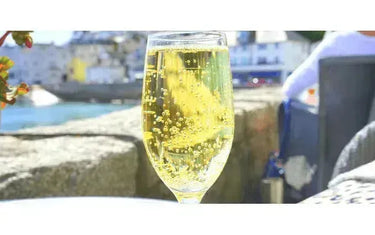
Somewhere between the cheese board and the countdown, most Canadian tables still reach for a bottle from France or Italy out of habit. That is a shame. Some of the best bubbles poured this year came from Niagara, the Okanagan and Nova Scotia's Annapolis Valley. Canadian sparkling wine has quietly gotten very good, and most Canadians have never tasted it.
The short answer is climate. Canada's short growing season keeps natural acidity high in the grapes, and acidity is the backbone every good sparkling wine needs. Producers in Ontario, British Columbia and Nova Scotia have made a strength of that. Using both traditional method and tank method, they turn cool-climate fruit into wines that hold their own at the National Wine Awards of Canada. It stays one of the country's best-kept secrets, mostly because sparkling wine still gets treated as a special-occasion pour, saved for toasts and countdowns.
Why cool climates make better bubbles
Sparkling wine starts as a lean, tart base wine, and that base is exactly what a cool climate is good at growing. A shorter growing season means grapes build up sugar more slowly than acid. They come off the vine bright and tart, with plenty of that acid intact, and it carries through the second fermentation that gives the wine its bubbles. It is also what keeps a good sparkling wine tasting fresh years after the grapes were picked.
Canadian producers make sparkling wine two main ways. Traditional method ferments the wine a second time inside its own bottle, the same process Champagne uses. It tends to produce finer, longer-lasting bubbles, with toasty, bready notes from time spent ageing on its lees. Tank method, sometimes called Charmat, does that second fermentation in a large sealed tank before bottling instead. It keeps the wine's fruit character brighter and the price friendlier. Both show up across the country, often from the same winery.
From the Niagara Peninsula to the Okanagan to the Atlantic coast
Ontario's Niagara Peninsula has some of the country's most established sparkling houses. Most work with Chardonnay and Pinot Noir on cool sites along the escarpment. British Columbia's Okanagan Valley leans warmer overall, but its higher-elevation and northern vineyards still produce sparkling wine with real fruit intensity and enough acid to stay balanced. Nova Scotia pushes furthest into cool-climate territory. The Annapolis Valley's short, damp growing season sits closer to a Champagne-style climate than anywhere else in the country, and its still and sparkling wines have built a real reputation because of it.
All three provinces are winning for it. Sparkling wines from Ontario, British Columbia and Nova Scotia all took home Gold at the 2025 National Wine Awards of Canada. Canadian entries keep showing up at international competitions that used to overlook them entirely. Curious how the traditional method actually works before you shop? This look at the process breaks it down.
What to pour it with
Sparkling wine is one of the most food-friendly styles on the shelf, and Canadian versions are no exception. A dry traditional-method sparkling cuts through a charcuterie board or a plate of bacon-wrapped scallops without a fight. A fruitier tank-method bottle is happy next to spicy takeout or a bowl of salty popcorn. And if fresh Atlantic oysters are on the table, a bone-dry Nova Scotia sparkling next to them is one of the best pairings in Canadian wine, full stop.
Sparkling wine also works at the table in ways red and white often do not. It moves from apéritif to main course to dessert without ever feeling like the wrong choice.
How to actually serve it
Most sparkling wine suffers from being poured too warm and rushed. Chill it colder than a still white, close to fridge temperature. The cold keeps the bubbles fine and the wine tasting fresh, rather than flat, halfway through the glass. A tall, narrow glass holds those bubbles longer than a wide coupe too, even if the coupe looks better on the table.
Open it slowly. Hold the cork steady and turn the bottle instead, and the release stays quiet rather than loud. A well-handled bottle, from the fridge to the glass, tastes better than one that spent the drive to a party rolling around in a hot trunk. That holds true no matter how good the wine inside it is.
Common questions about Canadian sparkling wine
Is Canadian sparkling wine actually good?
Yes. Cool-climate growing regions produce exactly the high-acid base wine that great sparkling needs, and Ontario, British Columbia and Nova Scotia sparklers have all won Gold at the National Wine Awards of Canada. It is a genuine strength, not a consolation prize next to Canadian icewine.
What food pairs best with Canadian sparkling wine?
Salty and briny foods are the classic match: cheese boards, bacon-wrapped scallops, popcorn and especially oysters. Off-dry styles also pair well with mildly spicy dishes.
Traditional method or tank method, what is the difference?
Traditional method ages the wine on its lees inside the bottle for finer, longer-lasting bubbles and toasty notes. Tank method ferments in bulk for a fresher, fruitier style at a friendlier price. Neither one is the "real" version; Canada just makes plenty of both.
Ready to try some? Browse the full range of Canadian sparkling wine on the marketplace, from crisp traditional method to easy-drinking tank-fermented bottles, all shipped straight from the winery that made them. For the basics of how sparkling wine gets made in the first place, this primer is a good place to start.