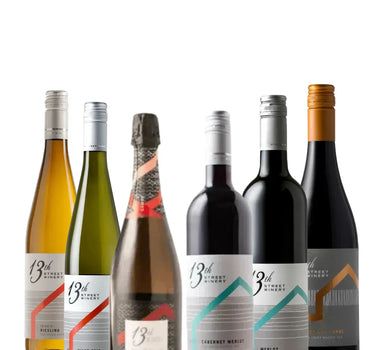
Riesling is a white wine tasting of lime and green apple, with a faint petrol note as it ages that its fans actively look for.
The acidity runs high, which is why it ages better than almost any other white. Even so, most people assume it is sweet. Plenty of it is bone dry, and the label tells you which. Ontario has the strongest claim to the grape in Canada, and Niagara grows most of what is here.
No liquor board stop along the way, just the winery to your door.
It's the only question that matters with Riesling, and the bottle usually answers it.
Dry Riesling is lime and green apple with nothing sweet behind it. Off-dry leaves a little sugar to round the edges, which is what makes it so good against heat. At the sweet end sit the late-harvest wines and icewine, where Riesling and Vidal do the heavy lifting.
Want certainty? Start from dry white wine or the sweet whites. Where a tasting note gives residual sugar in grams per litre, the lower the number, the drier the wine.
Why Niagara owns Canadian Riesling
Most of the Riesling here comes off the Niagara Peninsula, and that's no accident. It ripens late and hangs onto its acid, which suits a long cool autumn with a big lake holding off the frost.
Ontario is one of the few places in the New World where Riesling counts as a signature grape. The Okanagan grows good Riesling too, a touch riper, with a trickle from Lake Erie North Shore and Prince Edward County.
Almost none of it sees oak, which is the other reason it tastes so direct. Like that? Gewürztraminer is the next stop.
What Canadian Riesling costs
The cheap end of this page is unusually good. There's serious Riesling under $20 from producers you'd happily pay double for, and it doesn't thin out the way some grapes do.
Worth trying, if only to see for yourself. The rest of our Canadian white wine is there when you want it.
Why do people assume Riesling is sweet?
Cheap, mass-produced German blends sold as Blue Nun in the 1970s and 80s built that reputation. Most Riesling made today, in Canada included, runs dry to off-dry.
What food goes with Riesling?
Spice, above all. A little residual sugar and low alcohol calm chili down, which is why Riesling handles Thai and Szechuan better than almost anything. An off-dry one next to a butter tart is a very Canadian way to finish dinner.
Why does some Riesling smell like petrol?
It's a genuine Riesling note called TDN, and it isn't a fault. The compound builds as the wine ages, so older bottles show it more, and young bottles rarely have it at all.