
Don’t worry — there’s no test, and no, you don’t need to list out every wine-producing region you can think of (and even if you do, there’s no prize).
Let’s talk more big picture. There are more wine-producing countries in the world today than ever — from the burgeoning winemaking industry in China to the surprisingly solid Moldovan wines to reds and whites from Spain, Tasmania, Nova Scotia and beyond, it seems there’s wine being made in so many corners of the world.
But take a map of the world and lay it flat on a table (or, you know, do some equivalent thing on your tablet or whatever). Now, highlight the 30th and 50th parallels north of the Equator. Then do the same with the parallels south of the Equator.
Now, name a wine-producing region and find it on that map. It’s almost certain the region you chose falls between 30-50° latitude either north or south of the Equator.
Why? Well, it’s fairly simple stuff. Any closer to the Equator and it becomes just too hot for growing grapes; any further away from the Equator and, of course, it’s too cold.
The differences across parallels is significant, and falling in between those parallels certainly doesn’t mean you live in a wine-producing region. Winnipeg, where I live, is just south of the 50th parallel, and there isn’t anyone producing grape-based wine for public consumption ‘round these parts (vitis vinifera grapes, those used to make most commercial wines, would freeze and die in the winter).
Yet our latitude is quite similar to that of Kelowna, B.C., where fantastic Pinot Noir, Chardonnay, Riesling and more are produced, as well as Trier in the Mosel region of Germany, who also do remarkable work with Riesling.
That’s because latitude isn’t the only factor to growing grapes, naturally — add in factors such as shelter from wicked winds (spoken like a true frozen Winnipegger), nearby bodies of water to moderate temperature, elevation, soil, etc., and there are a number of factors/influences/variations within those two bands that can impact the ability grow grapes and make wine.
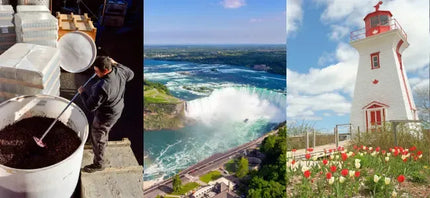
Heck, Osoyoos in B.C. is right near the 49th parallel, and is the regular Canadian hot spot, located in a desert–type setting — producers there often pump out some of Canada’s biggest, boldest reds. Yet head over to Niagara-on-the-Lake in Ontario, and they sit at just over 43.2° — far closer to the Equator — but would never be able to produce the gutsy reds we see coming from Osoyoos.
With our changing climate, rest assured that the wine-producing regions around the world are changing. There are more and more vineyards found beyond the 50th parallel both north and south of the Equator, and in new wine-producing countries and regions.
Maybe it’s time I invested in some potential Manitoba vineyards… you know, if I could get my car to start…